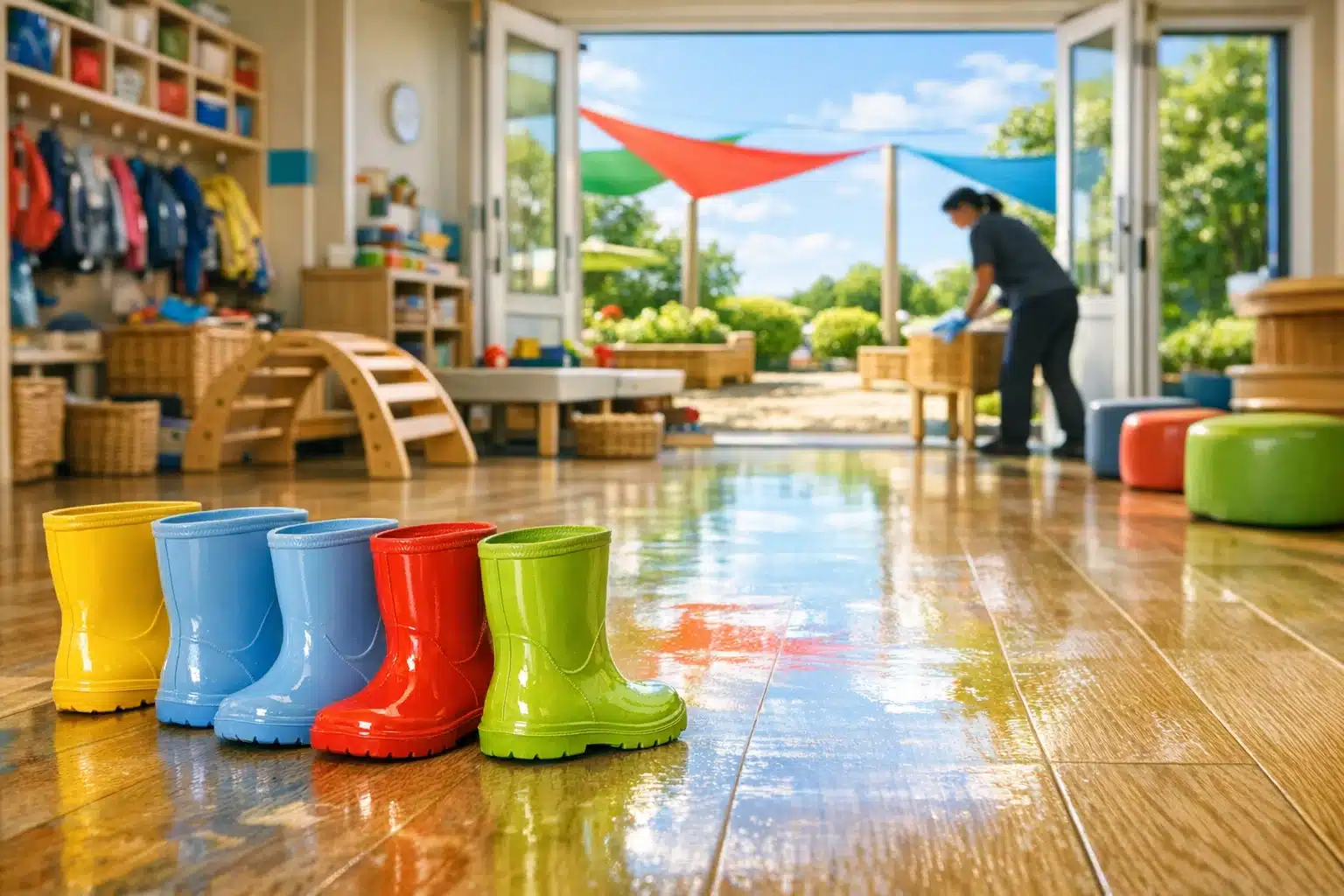
Kindergarten cleaning staff wanted: Competitive pay and stable employment
Every kindergarten runs on visible routines and quiet systems, and cleaning belongs to both. When tables are sanitized, washrooms stocked, and play corners reset, the room feels safer for children, easier for teachers, and more reassuring for families. For job seekers, this kind of work offers steady purpose with practical tasks; for school leaders, dependable cleaning staff protect daily operations, hygiene standards, and the reputation of the setting. That makes this role far more important than it first appears.
Article Outline
1. Why cleaning matters so much in early childhood settings. 2. What the daily, weekly, and seasonal tasks usually include. 3. Which skills, habits, and qualifications employers value most. 4. How competitive pay and stable employment are shaped by contracts, schedules, and local labor markets. 5. How kindergartens can hire, train, and retain reliable cleaning staff for the long term.
Why Cleaning Matters More in a Kindergarten Than in Many Other Workplaces
A kindergarten is not simply a smaller version of an office, and its cleaning needs are not a scaled-down office checklist. Young children learn with their hands, their feet, and their curiosity. They sit on rugs, swap toys, touch door handles, lean on low tables, spill paint, miss the bin, and return from outdoor play carrying half the playground on their shoes. In that lively rhythm, cleanliness becomes a form of support work for education itself. A neat room helps staff start faster in the morning, reduces distractions during the day, and reassures families that the environment is cared for with intention.
The health dimension is equally important. Early childhood settings typically have more shared surfaces and more close contact than many adult workplaces. Toys, sink taps, toilet areas, sleep mats, and snack tables can all become transfer points for germs if routines are inconsistent. Good cleaning does not eliminate illness altogether, but it does help reduce avoidable spread by lowering the amount of contamination left on frequently touched surfaces. It also supports broader standards around safeguarding and child welfare, because a well-maintained space makes hazards easier to spot. A sticky floor can lead to slips, an overflowing bin can attract pests, and an undercleaned washroom can quickly become a source of complaints.
There is also a trust factor that is easy to underestimate. Parents may not inspect every shelf, yet they notice the signals: clean windows, fresh-smelling toilets, tidy entrances, and orderly classrooms. These details send a message that the setting is run with discipline and care. In practical terms, the most sensitive areas often include:
• entrance handles and sign-in points
• child-height tables and chairs
• toilets, sinks, and nappy-changing areas where applicable
• shared toys and sensory play equipment
• rest mats, reading corners, and soft furnishings cleaned to schedule
A cleaner in this setting is not merely removing dirt. They are helping create the stage on which the day can unfold smoothly, safely, and with fewer interruptions.
Daily Duties, Cleaning Routines, and the Standards the Job Really Requires
When people picture cleaning work, they often imagine a mop bucket and a final sweep after everyone has gone home. In a kindergarten, the reality is more structured. The role usually combines visible upkeep, scheduled sanitation, and quiet prevention. A strong routine often begins with opening checks or early-shift preparation: ensuring washrooms are usable, bins are lined, soap and paper supplies are stocked, and common areas look presentable before children arrive. During or after the school day, the tasks become more detailed, especially in rooms where children eat, paint, nap, or engage in messy play.
Most settings divide work into layers rather than treating everything as one undifferentiated task. That is what separates efficient cleaning from reactive cleaning. A typical rhythm may include:
• daily tasks such as wiping tables, disinfecting high-touch points, sweeping floors, cleaning toilets, replenishing hygiene supplies, and removing waste
• weekly tasks such as deeper floor care, detailed dusting of lower shelving, sanitizing storage bins, and more thorough cleaning of internal glass
• periodic tasks such as carpet shampooing, machine scrubbing, wall spot-cleaning, ventilation grille checks, and seasonal deep cleans during school breaks
This tiered approach matters because not every surface needs the same treatment at the same time. Overcleaning some materials can damage them, while undercleaning others can create health and maintenance problems later.
Another critical aspect is product use. In early years environments, cleaning must be effective without creating unnecessary chemical risk. Staff need to understand labeling, dilution instructions, storage rules, and contact times for disinfectants. A spray that is wiped off too quickly may not do the job it was chosen for, while the wrong chemical on a toy or soft surface can be inappropriate for children. Cloth color coding, separation of toilet-cleaning tools from classroom tools, and clear laundry procedures all help prevent cross-contamination. Documentation can also play a role, especially in larger settings. Cleaning checklists, refill logs, and reporting notes help managers see patterns, track missed areas, and respond before a minor issue becomes a major complaint. In that sense, the role blends manual work with practical systems thinking, and the best routines feel almost invisible because everything simply works.
Skills, Qualities, and Qualifications Employers Usually Look For
It is easy to describe cleaning as low-complexity work until something goes wrong. A late arrival can delay room setup, a missed washroom check can affect the whole day, and poor product handling can damage surfaces or create safety concerns. That is why employers often value habits and judgment just as much as prior experience. Reliability sits at the top of the list. A kindergarten depends on rooms being ready at specific times, not whenever it happens to be convenient. If the classroom must open at eight, the work tied to that opening has to be finished on schedule. There is very little room for casual inconsistency in a place built around children’s routines.
Communication matters more here than in many other cleaning environments. A cleaner may need to report leaking taps, broken locks, low stock, bodily fluid incidents handled under procedure, or damaged furniture that could pose a risk. They may also need to work around teachers, office staff, and maintenance teams without disrupting lessons or rest periods. In a hotel, presentation may dominate. In an office, speed after hours may be the main pressure. In a kindergarten, timing, child awareness, and safe coordination all come together. Useful qualities often include:
• attention to detail without losing sight of priorities
• physical stamina for lifting, bending, and repeated movement
• discretion and professionalism around children and families
• basic literacy for labels, instructions, and checklists
• willingness to follow safeguarding and health procedures exactly
These traits are not flashy, but they are the backbone of dependable performance.
Formal qualifications vary by country and employer. Some settings hire based mainly on experience and provide on-the-job training, while others prefer candidates with cleaning certificates, health and safety training, or prior work in schools, nurseries, or care environments. Background screening may also be required where regulations call for it, especially in roles that place staff in educational premises. Yet paper credentials alone rarely guarantee success. Employers often remember the candidate who speaks clearly about routines, asks sensible questions about products and schedules, and understands that a child-centered environment requires patience and care. The strongest applicants usually show that they can do three things at once: clean properly, notice problems early, and fit into a team culture where reliability is not optional. In short, the role rewards practical competence, but it also rewards steadiness, which is sometimes even harder to find.
Competitive Pay and Stable Employment: What the Phrase Means in Practice
The phrase competitive pay appears in many job listings, but on its own it tells applicants very little. In the context of kindergarten cleaning, real competitiveness usually depends on how the wage compares with local cleaning rates, whether hours are guaranteed, and what benefits come with the contract. A modest hourly rate can still attract candidates if the schedule is predictable, travel time is manageable, and the position includes paid leave, pension contributions, training, or school-holiday planning. On the other hand, a slightly higher rate may fail to hold staff if shifts are split awkwardly, expectations are vague, or supplies are constantly missing. In other words, compensation is broader than the number printed beside the currency symbol.
Stable employment is also worth unpacking. Many people are drawn to education support roles because schools and early years settings need recurring maintenance every week, every term, and every year. That can make the sector feel steadier than highly seasonal industries such as tourism or event work. Still, stability varies based on the employment model. An in-house role may offer stronger integration with the school community, clearer communication, and better continuity. A contracted role through a facilities company may offer access to wider training, substitute coverage, or transfer opportunities between sites. Neither model is automatically better for everyone. The fit depends on priorities such as benefits, supervision, flexibility, and long-term progression.
For employers hoping to attract reliable staff, pay strategy should be paired with job design. Applicants often compare roles using a practical checklist:
• Is the number of weekly hours clearly stated?
• Are shifts before opening, after closing, or split across the day?
• Is equipment provided and maintained properly?
• Are extra duties, such as laundry or supply ordering, reflected in the wage?
• Is there a path to team leader, site supervisor, or facilities support work?
For job seekers, these questions matter because the hidden details shape daily life more than slogans do. For managers, transparency improves recruitment and retention. A well-structured role with fair pay, realistic workloads, and consistent supervision often outperforms a poorly designed role advertised with bigger promises. In a labor market where dependable staff are hard to replace, the most persuasive offer is usually the one that respects people’s time, sets clear expectations, and turns routine work into sustainable employment rather than constant churn.
How to Hire, Onboard, and Keep Good Cleaning Staff in a Kindergarten
Hiring well begins long before the interview. The job description should explain the environment, not just the tasks. Candidates need to know whether they will clean one small setting or a larger site with multiple rooms, whether the shift is early morning or evening, and whether they will work alone or as part of a team. Clarity at this stage filters out mismatches and attracts applicants who understand the rhythm of education settings. A vague advertisement may bring many responses, but it often produces the wrong short list. A sharper posting usually includes the work hours, physical demands, product-handling expectations, reporting line, and any required checks or certifications.
Interviewing for this role should focus on judgment as much as experience. Instead of asking only whether someone has cleaned before, employers can explore how the candidate thinks. Useful questions might cover what they would do if soap ran out during the day, how they separate toilet-area tools from classroom tools, or how they would report a damaged piece of child-height furniture. These scenarios reveal whether the person understands that cleaning in a kindergarten is connected to safety, communication, and routine. A brief practical assessment can also help if it is lawful and reasonable. Seeing how someone organizes supplies or talks through priorities often gives a more reliable picture than a polished answer alone.
Retention depends heavily on onboarding. New hires need more than a key and a cupboard tour. A thoughtful start should include:
• a written task schedule by room and frequency
• product training, including storage and safe dilution
• site-specific procedures for spills, bodily fluids, and incident reporting
• introductions to teachers, administrators, and maintenance contacts
• a clear process for requesting supplies and reporting equipment faults
After onboarding, consistency matters. Staff stay longer when the workload is achievable, praise is not rare, and problems are addressed before frustration hardens into resignation. Regular check-ins, adequate stock, functioning equipment, and respectful supervision make an enormous difference in a role that can otherwise feel invisible. There is a lesson here for any kindergarten leader: if cleaning quality seems unstable, the answer is not always stricter inspection. Sometimes the real fix is better systems, clearer communication, and a job structure that gives good workers a reason to stay. When that happens, the whole setting benefits, from the front door to the last classroom shelf.
Conclusion for Job Seekers and Kindergarten Leaders
For anyone considering this line of work, kindergarten cleaning offers something valuable: clear responsibilities, visible results, and a role that genuinely supports children’s daily environment. For employers, the lesson is just as direct. Strong cleaning teams are built through honest job ads, fair pay, sensible routines, proper training, and respect for the people doing essential work behind the scenes. A bright classroom does not happen by accident, and neither does a dependable workforce. When schools treat cleaning as a professional function rather than an afterthought, they improve hygiene, strengthen trust with families, and create a more stable workplace for everyone involved.