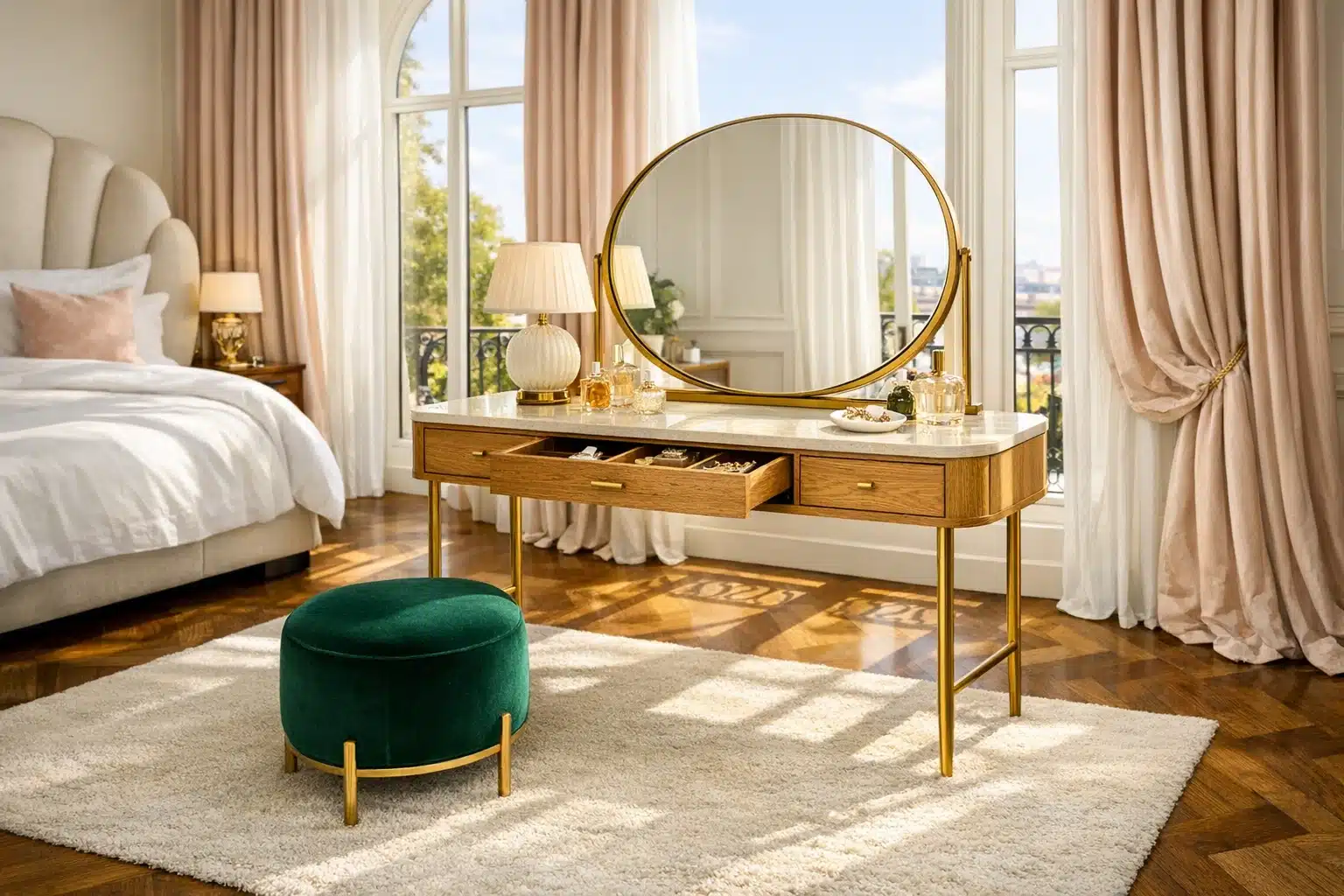
How to choose a dressing table in 2026, and how much will it cost?
A dressing table in 2026 has to do more than look charming beside a bed or under a window. It often serves as a grooming station, storage hub, lighting point, and even a compact desk in smaller homes. That makes the buying decision more practical than many people expect. If you understand size, materials, mirror quality, and price drivers before shopping, you are far more likely to choose a piece that stays useful for years instead of becoming a pretty frustration.
Article Outline
- How a dressing table fits modern routines, room planning, and daily use
- Materials, mirrors, lighting, and construction quality compared
- Style choices, storage layouts, and the best fit for different spaces
- Expected dressing table costs in 2026, from budget models to custom furniture
- A final checklist and practical conclusion for shoppers, renters, and homeowners
1. What a dressing table needs to do in 2026
A dressing table used to be thought of as a decorative extra, something elegant but optional. In 2026, that idea feels dated. Homes are more space-conscious, routines are more personalized, and furniture is expected to work harder. For many people, a dressing table now combines the jobs of a vanity, organizer, mirror station, and compact work surface. If a piece cannot support real daily habits, its style alone will not save it.
The first step is not choosing a finish or a mirror shape. It is understanding how the table will actually be used. Someone who keeps only a hairbrush, moisturizer, and a fragrance bottle can live happily with a slim model and one drawer. A person with cosmetics, skin care, hair tools, jewelry, and accessories will need divided storage, cable access, and a wider top. The difference matters. A beautiful table that constantly overflows becomes a clutter magnet, and clutter is the fastest way to make an elegant corner feel tired.
Room planning is just as important. Most dressing tables are comfortable when they are roughly 70 to 120 cm wide and 40 to 50 cm deep, though compact versions can be smaller. Before shopping, measure not only the wall but also the clearance around the stool or chair. A narrow bedroom can make a standard table feel bulky, while a large room can swallow a tiny unit and make it look accidental. If there is a window nearby, that is often a gift, because natural light remains useful for grooming and makeup application. If not, built-in lighting or a nearby lamp becomes more important.
It helps to think through a few practical questions:
- Will the table be used every morning, or only occasionally?
- Do you need open access to products, or hidden storage for a calmer look?
- Will a stool tuck neatly underneath, or do you prefer a supportive chair?
- Is there a power outlet nearby for a hair dryer, straightener, or lighted mirror?
- Will the same piece need to function as a study desk or laptop station?
Ergonomics deserve more attention than they usually get. A table that is too high can make seating awkward. A mirror set too low or too far back can strain the neck. Drawers that hit the knees are a subtle but constant annoyance. Ideally, the user should sit comfortably with enough legroom, reach the surface without hunching, and see the mirror clearly without leaning forward like a detective studying clues.
Good dressing tables also respond to lifestyle shifts. Renters may prefer lightweight or modular designs that are easier to move. Families may want rounded corners and stable frames. People in smaller apartments often benefit from wall-mounted or fold-down models. In other words, choosing well starts with function. Once that part is clear, style becomes much easier to select because the furniture already has a job description.
2. Materials, mirrors, lighting, and build quality: what really matters
If size and purpose decide whether a dressing table fits your life, materials and construction decide whether it will last. This is where price differences begin to make sense. Two tables may look similar in photos, yet one feels sturdy for years while the other develops wobbly legs, sticky drawers, and a mirror that seems to tremble when you breathe near it.
Solid wood remains one of the most durable choices. Oak, ash, rubberwood, pine, and walnut all appear in the market, though their prices vary widely. Solid wood tends to offer better longevity, repairability, and visual warmth. It can also gain character over time rather than looking worn out. The trade-off is cost, weight, and occasional sensitivity to humidity. Veneered wood can be a smart middle path, especially when the core material is stable and the veneer is well applied. A good veneer looks refined and often costs far less than fully solid construction.
MDF and engineered wood dominate the mid-market because they allow clean shapes, painted finishes, and more affordable pricing. Not all engineered boards are poor quality. The difference lies in density, edge finishing, joinery, and hardware. A well-made MDF dressing table with quality runners can outperform a badly made “wood” table sold mostly on appearance. Particleboard is usually the lowest-priced option. It can be reasonable for light use, but it is more vulnerable to sagging, chipped edges, and water damage.
When comparing materials, it helps to weigh them like this:
-
Solid wood: durable, repairable, often premium in feel, usually higher in cost.
-
Wood veneer: attractive balance of appearance and price, quality depends on base structure.
-
MDF: smooth for painted finishes, widely available, best when paired with reliable hardware.
-
Particleboard: budget-friendly, but generally the least durable over long-term use.
-
Metal and glass: modern in appearance, easy to clean, though fingerprints and scratches can show quickly.
The mirror deserves its own inspection. A dressing table mirror should be clear, stable, and appropriately sized for the user’s routine. Fixed mirrors are simple and space efficient. Tri-fold mirrors help with side views for hair styling. Adjustable mirrors provide flexibility in compact layouts. LED mirrors have become more common, especially in 2026, but the best ones do not simply glow; they provide useful, even light. Look for lighting that avoids harsh blue tones or heavy shadowing. Color temperatures around 3000K to 5000K are usually more practical than theatrical, overly cool lighting that makes a face look like it belongs in a refrigerator aisle.
Small construction details often separate a smart purchase from a future regret. Drawer runners should move smoothly. Handles should feel firmly attached. Joints should not shift under light pressure. Legs should sit level on the floor without rocking. If the table includes a stool, its seat height should align sensibly with the tabletop. Many buyers focus on the mirror and finish because those are easy to notice, but hardware tells the deeper story. Furniture whispers its quality through the parts you touch every day.
3. Choosing the right style, storage layout, and design for your room
Style matters, but not in the shallow way people sometimes assume. A dressing table is one of those pieces that can either complete a room or interrupt it. The right model feels intentional, as if it belongs there and always did. The wrong one can be perfectly expensive and still look like a guest who arrived with too much luggage.
In 2026, shoppers usually choose from a few broad directions. Modern minimalist tables tend to feature straight lines, slim profiles, and restrained hardware. These work well in smaller rooms because they look visually lighter. Scandinavian-inspired designs add pale wood tones, rounded edges, and a softer, more relaxed mood. Classic and traditional tables often use carved details, richer stains, and more decorative mirrors, which suit larger rooms or interiors with layered textures. Glamorous styles may include metallic accents, upholstered stools, or glass tops, though these require more regular cleaning if you want them to keep their polished look.
Storage layout is where personality enters the room. Some people love a clean tabletop with everything hidden away. Others prefer a few favorite items visible, like perfume bottles or a jewelry tray. Neither approach is wrong, but the furniture should support the habit rather than fight it. Deep drawers are useful for bulkier tools, but shallow divided drawers are often better for everyday organization. Open shelves can be convenient, although they demand tidiness. A table with one wide central drawer may look elegant, yet several smaller drawers often make life easier.
Here are some common design matches:
-
Small apartments: wall-mounted tables, narrow legs, fold-down surfaces, or mirror-cabinet combinations.
-
Shared bedrooms: compact models with strong storage discipline and a tucked-away stool.
-
Beauty enthusiasts: wider tops, drawer dividers, integrated lighting, and easy-to-clean surfaces.
-
Multi-use rooms: tables that double as a desk, especially with a neutral mirror and understated shape.
-
Statement interiors: sculptural mirrors, bold finishes, or premium wood grain used as a focal point.
Scale is another quiet hero. A dressing table should relate to the height of the bed, the width of the wall, and the visual weight of surrounding furniture. A very ornate table can overwhelm a tight room. A tiny piece may disappear against a large wardrobe. Matching every item exactly is not necessary, and in many cases it makes a room feel flat. Coordinating tones and proportions is usually more successful than buying a perfectly matched set.
Consider the seat as part of the design, not an afterthought. A stool saves space and slides away neatly. A chair adds comfort for longer routines and can make the area feel more complete. Upholstered seating feels warmer, while wood or acrylic looks lighter. The best choice depends on whether the table is a quick stop in the morning or a place where someone truly settles in. A dressing table is part utility, part ritual. That is why the best designs do not just store things; they shape a daily pause, a small island of order in the middle of a busy room.
4. How much will a dressing table cost in 2026?
The most practical question is usually the one people ask last: how much should you expect to spend? In 2026, dressing table prices are likely to remain broad because the category includes everything from flat-pack basics to custom furniture pieces. Material costs, shipping charges, lighting features, upholstery, and assembly complexity all affect the total. That means the useful answer is not one number, but a series of realistic ranges.
At the budget end, many shoppers can expect simple dressing tables to fall roughly between 80 and 200 USD, or the local equivalent depending on country and retailer. In this tier, the table will often use particleboard or basic MDF, a simple mirror, and limited storage. These models can work in guest rooms, first apartments, student housing, or short-term setups. What you are sacrificing is usually thickness of material, long-term durability, and better hardware. If the table is lightly used, that compromise may be perfectly reasonable.
The mid-range market often sits around 220 to 600 USD. This is where value becomes more interesting. Buyers often get denser MDF, better veneer, improved drawer slides, sturdier mirrors, and finishes that look more refined in person than in product photos. A stool may be included. Storage tends to be better organized, and the overall proportions usually feel more considered. For many households, this is the sweet spot because it balances appearance, usefulness, and lifespan without drifting into luxury pricing.
Upper mid-range and premium tables commonly start around 650 USD and can rise to 1,500 USD or more. Here you may find solid wood frames, stone or tempered glass tops, premium upholstery, integrated LED mirrors, soft-close drawers, and more design-led detailing. These pieces are less about basic function and more about long-term ownership, craftsmanship, or a specific aesthetic. Custom and designer versions can move beyond 1,500 USD very quickly, especially when made to measure or paired with specialized mirrors and seating.
When budgeting, remember that the shelf price is not always the final bill. Extra costs can include:
-
Shipping or white-glove delivery, often 40 to 250 USD or higher
-
Assembly fees, especially for mirrored or heavy pieces
-
A separate stool or chair, commonly 50 to 250 USD
-
Lighting upgrades, bulbs, or plug-in mirror systems
-
Drawer organizers, trays, and cable management accessories
-
Wall anchoring or anti-tip hardware for safety
Prices may also shift because of regional freight costs, currency changes, local taxes, and retailer positioning. A model sold as affordable in one market may feel premium in another. Online shopping adds another twist: photography can flatten differences in quality, making a 150 USD table look suspiciously similar to one costing 500 USD. That is why dimensions, material descriptions, weight, warranty length, and customer reviews matter so much. Heavier furniture is not automatically better, but unrealistically low weight can signal thin materials.
A good rule is to spend according to how central the piece will be in your routine. If the dressing table is a daily-use station and part of the room’s visual identity, mid-range or better often pays off. If it is occasional-use furniture in a spare room, a simpler option can be enough. In 2026, the smartest buyers will not chase the lowest number or the fanciest finish. They will compare what the table actually offers for the money, which is where real value always lives.
5. Conclusion: the best dressing table for you is the one that fits your life
Choosing a dressing table well is less about trend chasing and more about honest observation. Look at your room, your habits, and your budget without romance for a moment. Then bring the romance back in after the practical questions are answered. That order matters. A table can be elegant, modern, vintage-inspired, or quietly minimal, but it still needs to hold the items you use, fit the wall you have, and feel comfortable when you sit down.
For renters, flexibility may be the deciding factor. A compact design, lighter construction, or a table that can double as a desk may be the most sensible route. For homeowners furnishing a long-term bedroom, sturdier materials and better hardware are often worth the additional investment. For beauty-focused users, storage and lighting deserve priority over decorative flourishes. For those styling a guest room, a simpler and more affordable model may provide all the usefulness required without stretching the budget.
A practical final checklist can help narrow the field:
-
Measure the wall, the depth, and the clearance for seating before browsing.
-
Choose storage based on what you actually own, not what looks tidy in a catalog.
-
Check materials, drawer runners, and mirror stability with more attention than the finish alone.
-
Think about lighting conditions during the time of day the table will be used most.
-
Set a full budget that includes delivery, seating, accessories, and assembly if needed.
-
Pick a style that fits the room, but avoid sacrificing comfort for appearance.
If there is one useful truth to carry into 2026, it is this: the right dressing table should make a routine easier, not more complicated. It should reduce clutter instead of collecting it. It should suit the room instead of forcing the room to apologize for it. The best purchase often feels almost effortless once it is in place, because the furniture supports the rhythm of daily life without asking for constant adjustment.
For shoppers trying to decide where to spend, the middle of the market will likely remain the safest zone for most households. It usually offers the strongest balance between durability, design, and price. Still, a budget model can serve well in the right setting, and a premium piece can be justified if it meets a long-term need and brings genuine satisfaction. Buy with clear measurements, realistic expectations, and a sharp eye for construction. Do that, and your dressing table will not just occupy a corner of the room. It will earn it.