Explore Edinburgh Weekend Getaways in 2026 – All-Inclusive Travel Guide
Edinburgh is one of those rare cities that works brilliantly for a short break because nearly every street seems to hold a story, a skyline view, or a place to linger over coffee. In 2026, that appeal feels even sharper as travelers look for weekend trips that balance culture, walkability, and easy rail or air access. This guide maps out how to use limited time well, from choosing the right neighborhood to building an itinerary that does not feel rushed. Read on if you want a practical plan that still leaves room for surprise.
Article outline:
- Why Edinburgh remains one of Europe’s strongest weekend city breaks in 2026
- How to arrive, move around efficiently, and choose the right area to stay
- A two-day itinerary that balances landmarks, views, food, and downtime
- Where to eat, what to book, and how to adapt when weather or crowds shift your plans
- Final planning advice on budget, packing, timing, and the kind of traveler this trip suits best
Why Edinburgh Works So Well for a Weekend in 2026
Edinburgh has long been a strong choice for a short city break, but in 2026 it feels especially relevant for travelers who want depth without logistical strain. Some cities demand four or five days before they begin to make sense. Edinburgh offers a different bargain. Its center is compact enough to explore on foot, yet layered enough to feel rewarding hour by hour. You can stand on the Royal Mile in the morning, step into a museum before lunch, climb to a hilltop view in the late afternoon, and finish the evening in a candlelit pub or modern restaurant without ever feeling detached from the city’s rhythm. That is a rare combination, and it is exactly why a weekend here can feel complete rather than rushed.
Part of the city’s appeal lies in its contrast. Old Town is dramatic, vertical, and theatrical, with closes, stone facades, and winding historic routes that seem built for storytelling. New Town, despite the name, is Georgian and orderly, with broad streets, elegant terraces, and a calmer visual tempo. Together they create a compact urban landscape recognized by UNESCO, and that dual character gives visitors more variety than they often expect from a two-day trip. Compared with larger capitals such as London or Paris, Edinburgh is easier to “read” quickly. Compared with smaller heritage cities, it offers more museums, more dining range, and more evening atmosphere.
For 2026 travelers, several wider trends also work in Edinburgh’s favor. Weekend visitors increasingly look for destinations where public transport is useful, major sights are close together, and independent cafés, bookshops, galleries, and green spaces are all accessible without a car. Edinburgh fits that pattern extremely well. The tram link from the airport, frequent rail connections, and walkable core reduce friction from the moment you arrive. Even when the weather turns, and in Scotland that possibility should always be treated as a character rather than a crisis, the city remains rich in indoor alternatives.
A weekend here can suit different travel personalities at once:
- History-focused visitors can prioritize the castle, the Royal Mile, and hidden closes.
- Food-led travelers can build a trip around bakeries, seafood, whisky bars, and neighborhood dining.
- Scenic walkers can combine Arthur’s Seat, Calton Hill, Dean Village, and Leith waterfront.
- Culture seekers can mix galleries, live music, bookstores, and seasonal events.
The real strength of Edinburgh is that it does not force a single version of the “right” trip. It lets you build a weekend that feels grand or gentle, structured or wandering. In 2026, when many travelers value meaningful short breaks over overpacked schedules, that flexibility makes Edinburgh not just a good option, but a very intelligent one.
Getting There, Getting Around, and Choosing the Right Place to Stay
A successful weekend in Edinburgh begins before you reach the castle skyline. Because the trip is short, arrival strategy matters. If you are coming from elsewhere in the UK, rail is often the most comfortable option, especially if you arrive at Edinburgh Waverley, which places you almost immediately between the Old Town and New Town. For travelers flying in, Edinburgh Airport is well connected and notably manageable compared with many larger European hubs. The tram to the city center is usually the easiest first move, taking roughly half an hour to reach central stops, while airport buses remain useful if your accommodation sits away from the tram line. Taxis and ride-hailing services are available, but for many weekend visitors, public transport plus walking is entirely sufficient.
Once in the center, Edinburgh rewards people who think in neighborhoods rather than distance alone. A hotel that looks close on a map may sit at the top of a steep climb, while a place slightly farther away may feel easier and calmer in practice. The right base depends on the kind of weekend you want.
- Old Town suits first-time visitors who want major sights, historic atmosphere, and immediate access to the Royal Mile.
- New Town is ideal for elegant streets, good shopping, restaurants, and easier movement with luggage.
- Haymarket can be practical for rail links, slightly better value, and fast access westward.
- Stockbridge offers a more local, village-like feel with excellent cafés and independent shops.
- Leith works well for repeat visitors who prefer waterfront character, strong dining, and a less tourist-heavy base.
Accommodation choices in 2026 will likely continue to reflect patterns already seen across popular city-break destinations: central rooms book early, festival periods push rates upward, and the difference between weekday and weekend pricing can be significant. If you are traveling in August, during major events, or over a bank holiday, booking several months ahead is wise. Outside peak dates, shoulder season weekends in spring and autumn often provide the best balance of daylight, atmosphere, and value.
There is also a practical distinction between “central” and “convenient.” For example, staying directly on a busy tourist corridor may sound appealing, but light sleepers may prefer a side street in New Town or a quieter edge of the Old Town. Families might value larger rooms or apartment-style stays with breakfast options nearby. Couples often prioritize character and walkability. Solo travelers may prefer transport simplicity and late-evening comfort.
As for getting around, most visitors can rely on three things: their feet, local buses, and the occasional tram or taxi. Edinburgh is not huge, but it is hilly. Comfortable shoes matter more than many packing lists admit. Think of the city as compact but textured. Cobblestones, stairways, inclines, and sudden viewpoints are part of the experience. If you plan with that in mind, transport becomes less of a puzzle and more of a gentle rhythm that carries the weekend forward.
A Smart 48-Hour Itinerary: What to See Without Rushing the City
The temptation in Edinburgh is to try to do everything, because so much appears close together. A better approach is to build a weekend that moves through the city in natural arcs. For a classic first visit, start day one in the Old Town. Arrive early if possible and begin with Edinburgh Castle, one of the city’s most in-demand attractions. Advance booking is strongly recommended, especially in busy travel periods, because timed entry can save precious time in a short itinerary. After the castle, walk down the Royal Mile at a slower pace than most people do. This stretch is not just a route; it is a corridor of layered detail, where courtyards, closes, small museums, churches, and shopfronts create a historical atmosphere best appreciated between major stops rather than only at them.
From there, choose one substantial midday stop rather than several quick ones. The National Museum of Scotland is an excellent option because it combines Scottish history, science, design, and broad public appeal, and general admission is typically free. If your interests lean literary or political, you can instead explore St Giles’ Cathedral and the surrounding historic lanes more deeply. Lunch can be simple and local rather than formal, especially on a sightseeing-heavy day. A soup, sandwich, bakery stop, or café plate gives you time back and often feels more in tune with the pace of a weekend trip.
For the afternoon, shift from monuments to viewpoint. Calton Hill is the easiest high-reward option for many visitors, with classic city panoramas that become especially beautiful as the light changes. Arthur’s Seat offers a more dramatic outdoor experience, but it requires more energy, better footwear, and a slightly larger time commitment. That choice depends on your travel mood. Calton Hill suits almost everyone. Arthur’s Seat suits those who want wind, space, and the feeling of stepping briefly outside the city while still looking directly at it.
Day two works best when it contrasts with day one. Instead of staying in the densest historic core, explore New Town, Stockbridge, Dean Village, or Leith depending on your interests. A balanced second day might look like this:
- Morning in New Town for breakfast, Georgian streets, and Princes Street Gardens views
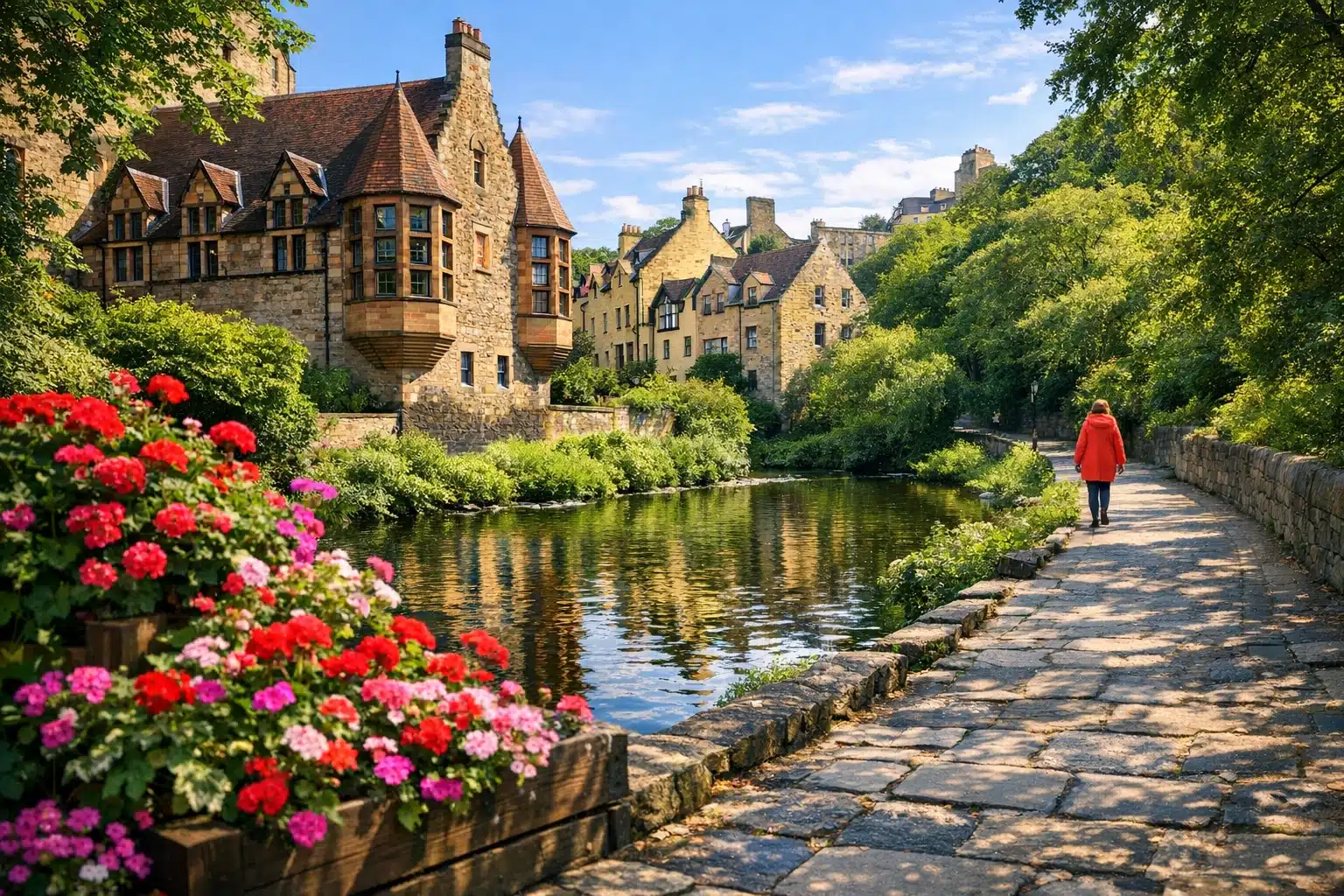
- Late morning walk to Dean Village and along the Water of Leith
- Afternoon in Stockbridge for independent shops and a relaxed lunch
- Evening in Leith for waterfront dining or a more neighborhood-based finish
If you prefer a more museum-led second day, the Scottish National Gallery and nearby central attractions make excellent rainy-weather substitutions. If you want fewer indoor stops, then simply let the city unfold through walking: Cockburn Street, Victoria Street, the Mound, Circus Lane, and the waterfront each offer distinct moods. Edinburgh is unusually good at rewarding detours. You may begin with a plan and end up following a violin tune down a close or pausing at a viewpoint you did not know to expect. That sense of accidental elegance is part of what makes a weekend here memorable.
Food, Evenings, Weather Backups, and How to Shape the Trip to Your Budget
Edinburgh’s food scene is one of the city’s biggest advantages for weekend travelers because it offers real variety without demanding deep local knowledge to enjoy it. You can spend carefully and still eat well, or lean into a more indulgent itinerary built around tasting menus, whisky bars, and polished dining rooms. The key is to match your food plan to your sightseeing plan. If one day is heavy on landmarks, keep lunch efficient and book a stronger dinner. If your second day is slower, use brunch and neighborhood cafés as part of the experience itself.
Traditional Scottish dishes still matter, but the city’s strengths go beyond heritage cooking alone. Haggis, Cullen skink, local salmon, venison, excellent oats-based breakfasts, and shortbread remain widely available, yet Edinburgh also performs strongly in bakery culture, specialty coffee, vegetarian menus, seafood restaurants, and relaxed bistro dining. In areas such as Stockbridge and Leith, you can feel the shift from visitor-focused convenience to more locally rooted habits. That does not make tourist-center dining inherently poor, but it does mean a short tram or taxi ride can change the tone of an evening quite a bit.
Here is a useful way to think about spending:
- Budget-friendly weekends work well with cafés, bakeries, pub meals, museum visits, and lots of walking.
- Mid-range breaks can include one paid headliner attraction, one special dinner, and a centrally located hotel.
- Higher-end trips often focus on boutique stays, tasting experiences, premium rooms, and private tours or curated add-ons.
Weather, of course, is part of the Edinburgh conversation. A sunny skyline can make the city feel almost cinematic, but rain and wind are never implausible companions. The trick is not to fight that reality. Build one indoor option into each half-day segment. If showers interrupt a planned hill walk, pivot to a gallery, museum, or historic interior. If fog softens the skyline, use the atmosphere rather than treating it as a loss. Edinburgh often looks striking in grey light; stone buildings, lamp glow, and wet pavements can make the city feel like a novel opened halfway through.
Evenings deserve thoughtful planning too. Some visitors want a classic pub with conversation, local beer, and a snug corner by the wall. Others want live music, a theatre performance, or a more contemporary restaurant scene. All of these are available, but reservations matter more on weekends than many travelers assume. If there is one dinner that really matters to you, book it in advance. Leave the second evening more flexible. That mix usually works well on a short trip.
In comparison with many major European capitals, Edinburgh can feel expensive at first glance, especially for central accommodation. Yet the city balances that with free museums, easy walking, and the fact that many of its best pleasures are not ticketed at all: the skyline from Calton Hill, the turn into Dean Village, the hush of a side street after rain, the sudden view of the castle between buildings. A weekend budget stretches further when you remember that not every memorable moment needs a queue or an entry fee.
Final Planning Notes for 2026 Travelers: Best Timing, Packing, and Who This Weekend Suits Most
If you are deciding whether Edinburgh is the right weekend getaway for 2026, the clearest answer is this: it suits travelers who want a short break with substance. It is especially strong for couples, solo travelers, friends planning a culture-led escape, and anyone who values walking through a city rather than merely checking into it. Families can enjoy it too, particularly with museum stops and open viewpoints, though steep streets and compact hotel rooms may influence how you pace the visit. For repeat visitors, the city remains rewarding because shifting your base from central Old Town to Stockbridge or Leith can make the same destination feel newly edited.
Timing matters. Late spring and early autumn are often the easiest sweet spots for a balanced weekend, offering decent daylight, active streets, and less pressure than the busiest summer dates. August is famous and energetic, but it can also be crowded, noisy, and more expensive due to festival demand. Winter weekends bring mood and festive atmosphere, though shorter daylight and chillier weather require a slower, more layered plan. There is no universally perfect month, only the version of Edinburgh that best fits your preferred pace.
Packing should be simple but deliberate:
- Bring comfortable walking shoes with decent grip.
- Pack layers instead of relying on one heavy item.
- Include a compact waterproof jacket or umbrella.
- Reserve space for a smarter evening outfit only if you truly plan to use it.
- Keep a power bank, refillable water bottle, and small day bag handy for long walks.
From a planning perspective, the smartest bookings to make early are usually accommodation, castle entry, and one key restaurant if food is important to your trip. After that, leave breathing room. Edinburgh rewards structure, but it also rewards drift. One of the best things about a weekend here is that the city often improves the plan rather than obeying it. You may discover that your favorite memory is not the expected headline attraction, but a lane lit by the late afternoon sun, a bookstore café that keeps you longer than intended, or a quiet view over slate rooftops while the wind moves across the hill.
For the target traveler, the real value of an Edinburgh weekend in 2026 is efficiency without thinness. You do not need a long holiday to feel immersed, and you do not need to overbook every hour to justify the trip. With a sensible base, a realistic itinerary, and a little flexibility for weather and mood, two days can deliver history, scenery, food, and atmosphere in unusually satisfying proportion. If your ideal getaway is rich but manageable, cultural without being exhausting, and scenic without demanding a car, Edinburgh remains one of the most dependable and rewarding weekend choices you can make.